
| “You can’t intentionally change what you haven’t first learned to notice.” |
How often do we move through life on cruise control—getting things done, meeting obligations, solving problems, and moving from one responsibility to the next—without stopping to ask why we’re doing what we’re doing?
In this episode, Erick explores the power of awareness and why becoming more conscious of what’s happening within us and around us is essential to making better decisions and living more intentionally. Awareness does not necessarily require us to immediately fix something. It begins with simply noticing. When we notice our habits, reactions, environment, and the perspectives of others, we create space between what happens to us and how we choose to respond.
Awareness is the ability to consciously notice and understand what is happening within you and around you.
It means slowing down long enough to ask:
Awareness comes before intentionality. Before we can change a habit, repair a relationship, change direction, manage an emotion, or make a better decision, we first have to recognize what’s happening.
Reading gets us outside of our own heads and exposes us to perspectives shaped by experiences different from our own. You don’t have to agree with everything you read to learn from it. Sometimes the greatest growth comes from encountering an idea that challenges how you currently see the world.
Key idea: Reading expands your world without requiring you to leave the room.
Listening isn’t limited to hearing the person speaking directly to you. Awareness means learning to read your environment. What’s being said? What’s not being said? What’s the mood in the room? Who’s engaged? Who has withdrawn? What seems to be frustrating or energizing people?
The more aware you become of these signals, the better equipped you are to understand the situation before deciding how to respond.
Key idea: Great leaders don’t just know what to say—they know how to read the room.
We often form conclusions about people before understanding what’s really happening. Instead of immediately judging someone’s behavior, create space for curiosity:
Good questions communicate: I’m willing to learn before I decide.
Without awareness, we tend to react: something happens, and we react.
Awareness interrupts that pattern: something happens → we notice → understand → consider → choose.
That space between what happens and how we respond may only last a few seconds, but those seconds can change a conversation, a relationship, a decision—and ultimately the direction of our lives.
Practice three simple habits:
Read more. Listen more. Ask better questions.
“You can’t intentionally change what you haven’t first learned to notice.”
“Awareness comes before intentionality.”
“Awareness creates space between observation and judgment.”
“I’m willing to learn before I decide.”
“Awareness creates choice.”
When we’re unaware, it’s easy to allow life to happen to us. We fall into routines, react to circumstances, do what’s necessary, and operate on cruise control.
Awareness interrupts that pattern. It gives us permission to look around, look inward, and ask: What am I doing? Why am I doing it? Is this still where I want to go?
Sometimes the first step toward rising above the chaos is simply becoming aware of it.
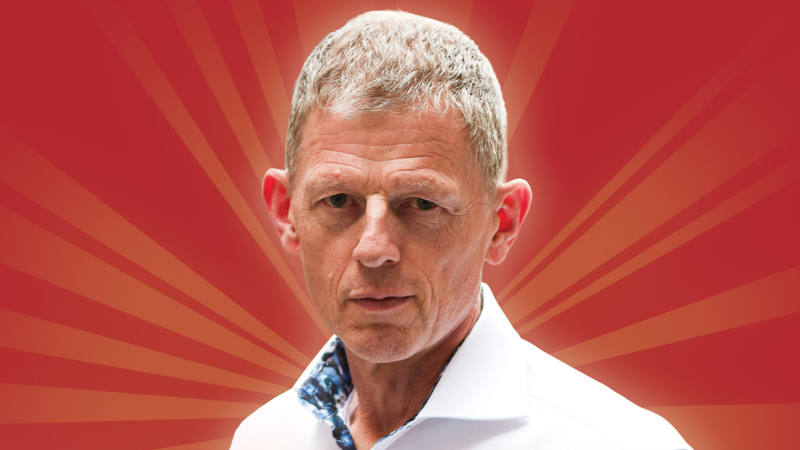
What happens when the life you are living looks successful on paper but no longer feels like your own? In this episode, Erick sits down with former Royal Air Force pilot, leadership coach, and author Will Steel to explore authentic leadership, genuine listening, and the courage to ask a deceptively difficult question: What do you really want?
Will shares how trying to fit the mold nearly ended his RAF officer career, why being himself ultimately earned him a leadership trophy, and why he later walked away from 12 years of flying to start again at the bottom. Their conversation challenges listeners to notice where fear, other people’s expectations, and routine may be keeping them stuck—and to intentionally choose what comes next.
During officer training at the Royal Air Force College Cranwell, Will followed advice to keep his head down, stay out of trouble, and simply get through the course. After 16 weeks, his flight commander told him he was essentially invisible and could not be recommended for graduation.
Faced with repeating the course or leaving, Will decided his strategy of trying to be what he thought others expected had failed. He returned determined to be himself and let the chips fall where they would. Eighteen weeks later, he graduated with the leadership trophy. The experience became a lasting lesson: authentic presence is more powerful than performing someone else’s version of leadership.
Notice when your attention leaves the person in front of you and moves into your own internal commentary. A practical reset is to acknowledge that you missed what was said, ask the person to repeat it, and return your attention to them.
Will recommends sitting with this question rather than forcing a quick answer. Journal about it. Pay attention to what lights you up. Strip away the obvious or socially acceptable answers and look for the work, relationships, and experiences that create a genuine sense of aliveness.
Once you know what you want, examine what is stopping you. Often the obstacle is fear of judgment, failure, loss of status, or uncertainty. Will’s challenge is to recognize how much of that fear may be based on what you imagine other people will think.
Erick describes a familiar place for many professionals: not unhappy enough to leave, but not happy enough to stay. You have built a career, responsibilities, a mortgage, perhaps a pension and children in college—and changing direction feels risky.
Will’s advice is not to impulsively quit. Do the inner work first. Revisit what drew you to your work in the first place, identify what you genuinely want now, and determine whether you need a new career—or simply a renewed connection to the one you already have.
Will Steel is a former RAF pilot turned transformational leadership coach, author, and host of the Free To Lead podcast, known for helping founders, CEOs, and senior leaders lead clearly under pressure. A graduate of RAF College Cranwell and recipient of the Leadership Trophy, Will spent a decade flying before transitioning into leadership development.
He later spent more than 21 years as a senior leader within one of the world’s most influential personal-development organisations, delivering programmes to over 90,000 people across 26 countries.
Today, he works globally across the Middle East, Africa, Europe, and the Americas, exposing the hidden patterns that quietly sabotage performance, decision-making, and relationships. Will is recognised for his direct, grounded approach that helps leaders lead with clarity, integrity, and authenticity—without losing themselves in the process.
Free To Lead challenges the idea that better leadership comes from better tactics. Instead, Will Steel goes straight to the real constraint on performance: the invisible beliefs and automatic reactions formed years earlier that quietly cap confidence, clarity, and decision-making under pressure.
Through practical insights and real-world application, the book shows leaders how to identify and dismantle these internal limits so they can lead from who they truly are.
The result is leadership that is grounded, decisive, and authentic—free from self-doubt, reactivity, and the constant pressure to prove or perform. This is not motivational theory—it’s a practical roadmap to leading with integrity while delivering real results.
A meaningful life is not built by endlessly following the path that looks safest or most acceptable to everyone else. It starts with being present enough to hear yourself, honest enough to ask what you really want, and courageous enough to keep choosing a life that reflects the answer.
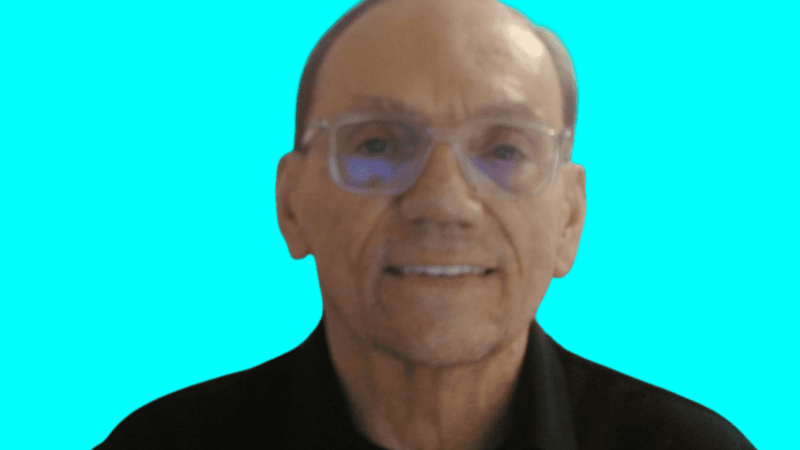
Burnout rarely arrives all at once. For Keith Cole, it accumulated through grief, combat, responsibility, suppressed trauma, long workdays, and the belief that strength meant pushing through without asking for help.
In this episode, Erick talks with Keith - a U.S. Marine Corps Vietnam veteran, former CPA, and author of Burnout: God's Recovery Plan - about what happens when endurance becomes exhaustion and why simply managing stress is not the same as healing.
Keith shares the losses and experiences that shaped his life, including the death of his father while he was in high school, being wounded three times in Vietnam, serving families of fallen Marines, losing his mother, and becoming guardian to his younger siblings at age 23.
Years later, while running a successful CPA practice, the pressure finally reached a breaking point. That moment became the beginning of a faith-centered recovery journey built around honesty, structure, rest, and the willingness to receive help.
Loss and rebellion: Keith expected to enter ministry, but the death of his father at age 52 changed his direction. Angry with God, he moved away from the church and enlisted in the Marine Corps during the Vietnam era.
Combat and accumulated trauma: Serving as an M60 machine gunner, Keith was wounded three times. After returning stateside, he served on Instructor-Inspector duty, where part of his responsibility included notifying next of kin and supporting honor details for fallen Marines - work he describes as, in many ways, harder than combat.
Responsibility without recovery: While still serving, Keith lost his mother and received an early discharge to become legal guardian to his 15- and 13-year-old siblings. He later worked through college, became a CPA, built his own practice, and continued carrying stress without talking about it or seeking support.
The breaking point: Late one night in his office, Keith reached for a bottle of scotch and realized it was no longer giving him relief. He cried out to God, spent time in prayer, and began confronting what years of pushing through had cost him.
Writing as a path toward healing: Because writing directly about his own experiences was painful, Keith created a fictional Marine named Kevin Casey and told his story through that character. The process helped him see that the same lessons might also help others facing burnout and stress, whether they had served in combat or not.
| Managing Stress | Healing |
| Keith compares managing stress to sweeping the front porch every day: it may look better for a while, but the source of the mess has not changed. | Healing means becoming honest about the root causes, allowing faith and trusted people into the process, and building a healthier structure for how you live and work. |
Keith describes a faith-centered daily rhythm he uses to prevent overload and stay grounded. In the conversation, he walks through the following elements of PRAISER:
P - Prayer - Talk with God throughout the day and seek guidance rather than carrying everything alone.
R - Reading Scripture - Use Scripture as a source of direction, perspective, and truth.
A - Affirmations - Reinforce the direction and beliefs that support the life you are trying to build.
I - Inscribing - Write in a gratitude journal and put important thoughts on paper.
S - Seeing - Use visualization to keep meaningful goals and desired outcomes in view.
E - Exercise - Make physical movement part of the recovery process; Keith and his wife consistently train together.
R - Rest - Protect periods of true rest - even short, quiet 15-minute blocks during the day with no phone, television, or task list.
Keith also emphasizes planning his daily actions through prayer and limiting the number of priorities he carries into a day, rather than trying to accomplish everything at once.
"The strength worked until it didn't."
"There's no shame in talking about it."
"There's no shame in getting somebody's assistance."
"Come unto me, all ye that labor and are heavy laden, and I will give you rest." - Matthew 11:28
Keith A. Cole is the author of Burnout: God's Recovery Plan, a speaker, Marine Corps combat veteran, and Christian who is passionate about helping people find lasting recovery from burnout through biblical truth.
Drawing from his own journey through trauma, exhaustion, and restoration, Keith encourages individuals to move beyond simply managing stress and instead discover God's design for healing, purpose, and peace.
His message emphasizes that burnout is often rooted in deeper issues of identity, unresolved wounds, and misplaced priorities—and that true recovery begins by surrendering those burdens to God.
Keith lives in Maryland and shares practical, faith-based encouragement through his writing and speaking.
Burnout does not mean you are weak, unfaithful, or incapable. Sometimes it means you have been carrying too much for too long without enough recovery, support, or honesty. You do not have to wait until everything collapses to make a change. Healing can begin with one honest conversation, one protected period of rest, and one decision to stop carrying the load alone.

In this episode, Erick welcomes Kalyca Zarich back to the Rise Above Chaos Podcast for a practical conversation about AI without the hype.
Kalyca explains why she believes AI should be used intentionally to reclaim time, reduce administrative friction, and create more capacity for the people and work that matter most. The conversation also tackles a critical concern: if AI only makes us more productive, will expectations simply rise and leave us just as overwhelmed as before?
Kalyca then makes the case for Claude, sharing how a six-month side-by-side test with ChatGPT led her to favor Claude for more advanced workflows. She breaks down features including Skills, Co-work, connectors, Projects, Artifacts, and Dispatch, and offers a clear starting point for anyone who wants to move beyond using AI as a chatbot and begin treating it like a well-trained assistant or AI employee.
Kalyca's interest in AI is deeply personal. After losing both of her parents within six weeks in 2018, she became acutely aware that time is our most finite resource. Her goal is not simply greater productivity. It is to use technology to reclaim time that can be reinvested in family, clients, community, and meaningful work.
Erick raises the concern that greater efficiency can simply create higher expectations. If AI helps us do three times as much work, organizations may eventually expect three times as much output. Kalyca's answer is intention and design: humans still have to establish boundaries, protect reclaimed time, and decide what the technology is actually for.
Kalyca spent approximately six months using Claude and ChatGPT side by side for the same work. She found Claude's output stronger for her use cases, but the biggest differentiator was Skills - reusable instructions and standard operating procedures that can be built into the system.
A Skill allows you to teach Claude how you want a recurring process handled. Kalyca shared an example in which a process that previously took three to four hours using a sequence of ChatGPT prompts dropped to roughly 30 minutes after she created a Claude Skill for the workflow.
For casual questions, recipes, brainstorming, or search-like use, Kalyca says the specific platform matters much less. Claude becomes especially compelling when the goal is to build repeatable workflows, connect systems, schedule tasks, and create AI employees that follow defined processes.
Co-work is the desktop application experience that allows Claude to interact more deeply with files and connected tools. Users can give Claude broad access or restrict it to specific folders and systems. This is where scheduled tasks, deeper workflows, and AI-employee-style use become especially powerful.
Connectors act like doors between Claude and the other systems you already use. Depending on your setup, Claude can work with email, calendars, CRMs, Slack, Zoom, project-management platforms, and other applications.
Projects create dedicated spaces for a specific area of work or life. Erick shared examples including a Health and Wellness Center, aging-parent responsibilities, a future South Carolina home purchase, and converting a current home into a short-term rental.
Artifacts are deliverables Claude creates and stores, such as briefs, documents, HTML files, lead magnets, and other outputs that can be retrieved and refined over time.
The Dispatch feature allows the Claude mobile app to pair with Co-work so tasks can be sent to the desktop version while you are away from your computer.
Erick describes a Claude Project built around four AI avatars: an overall doctor, a nurse practitioner, a nutritionist, and a fitness coach. He uploaded health history and blood-work information, created specialized Skills for each role, and connected the system to Notion as a source of truth for hard data.
The example illustrates how a single Project can combine documents, personas, Skills, and connected data to create a highly personalized support system.
AI is not automatically a path to more freedom. Used without intention, it can simply accelerate the same habits and expectations that already create overwhelm.
Used deliberately, however, it can remove friction, protect attention, and create valuable margin. The advantage will not belong simply to the people who use the most AI.
It will belong to the people who know what they want the technology to do, what they refuse to surrender to it, and how they will reinvest the time it gives back.

In this episode, Erick explores why tradition matters and how it can help us navigate a rapidly changing world.
Using West Point and the Long Gray Line as a powerful example, he explains how healthy traditions connect generations, preserve identity, and give us wisdom when life becomes chaotic. Tradition is not about refusing to change.
At its best, it carries forward what is valuable from the past so we can move into the future with greater clarity and purpose.
Erick breaks the episode into three reasons tradition matters - perspective, a True North, and a bridge between the past and the future - and then offers three practical ways to leverage tradition in your own family, organization, faith, and community.
At West Point, the Long Gray Line represents generations of graduates who faced many of the same pressures, obstacles, and formative experiences. Because graduates continue to return, mentor, and support current cadets, tradition creates a living connection between people at different stages of the same journey. Someone who has already traveled the road can help you see that today's overwhelming problem may look very different five years from now.
Life changes constantly. Careers, families, technology, culture, and circumstances all evolve. Healthy traditions provide an anchor in the middle of that movement. They remind us: this is who we are, this is what we believe, this is how we behave, and this is what matters to us. Tradition may not tell you exactly where you are going, but it can remind you who you are while you get there.
Tradition should not be confused with stagnation. The purpose is not to keep doing something simply because it has always been done that way. Healthy tradition identifies what is worth preserving and carries it forward. Principles such as duty, honor, service, leadership, character, family, faith, and excellence can transcend generations even as the world around them changes.
Before dismissing a tradition as outdated, inconvenient, or irrelevant, get curious. Ask why it exists, where it came from, what it was designed to teach, and what principle sits underneath it. Not every tradition should survive forever, but it is worth understanding a tradition before deciding it has no value.
Traditions are best learned through people. Find someone who has lived within that tradition longer than you have. Ask what it means, why it matters, what they learned from it, and what you may be missing. The deepest wisdom is often not in the ceremony itself, but in the people who understand what the ceremony represents.
Do not simply observe a tradition. Live the value underneath it. If it represents service, serve. If it represents integrity, demonstrate integrity. If it represents family, invest in your family. Then tell the stories, explain why they matter, and invite the next generation into them. A tradition that is not passed down eventually becomes history.
Identify one family, organizational, faith, or community tradition that matters to you and learn about it and live it
Tradition is not about being stuck in the past. It is about carrying forward the wisdom, values, and identity that help us face the future. When life becomes chaotic, tradition can give us perspective, point us back toward True North, and remind us that we are part of a story larger than ourselves. Embrace the traditions worth keeping, learn from the people who carried them before you, live them well, and then become the guide who passes them on.

Life is unpredictable. The diagnosis, unexpected expense, family crisis, or career disruption rarely arrives when it is convenient. In this episode, Erick explores three resources that can help you absorb those moments with greater resilience: your health, your emergency fund, and your critical relationships.
The central idea is simple: you cannot prepare for the storm during the storm. These three areas take time to build, and each creates a different kind of margin that can reduce fear and give you options when chaos arrives.
Erick shares personal examples and practical questions to help you evaluate where you are strong, where you are exposed, and what you can begin building today.
Your health is a reserve. Every workout, walk, healthy meal, night of quality sleep, and preventive appointment is a deposit into your physical capacity. You may eventually need that reserve during illness, surgery, injury, prolonged stress, or another demanding season. The objective is not to become an elite athlete - it is to prepare your body for life.
Question to Consider: If your body had to carry you through a difficult six months, have you prepared it?
Life gets expensive when things go wrong. A furnace fails, a car breaks down, a client disappears, a medical issue develops, or a family emergency requires immediate travel. Financial margin turns an emergency from something that can overwhelm you into something you may be able to say, 'This is bad, but we can handle it.' The amount will vary by person, but the habit of building margin matters.
Question to Consider: If your income stopped tomorrow or a major unexpected expense hit your family, how much time would your savings buy you?
When life becomes too heavy to carry alone, you need people. Strong relationships are built through ordinary deposits: the phone call, the coffee, the text, remembering important moments, listening, showing up, and being present. Those small investments become relational equity when life gets hard.
Question to Consider: Who are the three to five people you could call at 2:00 a.m. if your world fell apart - and would they feel comfortable calling you?
These three resources are connected by one idea: margin. Your health gives you physical margin. Your emergency fund gives you financial margin. Your critical relationships give you relational and emotional margin. Margin gives you the capacity to absorb the unexpected without allowing one hard moment to destroy everything around it.
Pick one of the three areas: health, emergency fund, or critical relationships and make one deposit in that area this week.
You cannot know exactly what the next five years will bring. There will be wonderful moments, and there will be hard ones. The objective is not to prepare out of fear. It is to prepare so that fear does not control you. Build your health, your emergency fund, and your critical relationships before you need them. Those reserves create the margin that helps you rise above the chaos when life inevitably gets difficult.

Have you ever felt like you're living on autopilot? In this episode, Erick Rheam explains why getting out of a rut isn't about finding more motivation—it's about creating intentional disruption.
Drawing from his annual summer stay in Hilton Head, Erick shares how changing his surroundings consistently produces greater clarity, fresh ideas, and renewed energy.
By intentionally changing your environment, your patterns, and your inputs, you can break the cycle of routine thinking and create momentum for meaningful growth.
Breakthroughs rarely happen by doing the same things the same way every day. They happen when we intentionally disrupt the familiar, invite fresh perspectives, and create space for new ideas to emerge.

In this Independence Day episode, Erick Rheam explores why celebration is more than a tradition—it is a discipline that shapes perspective, preserves identity, and creates momentum for the future.
Using the Fourth of July as the backdrop, Erick shares historical insights before unpacking three timeless principles that explain why intentional celebration helps us rise above the chaos of everyday life.
Whether celebrating a holiday, an anniversary, or a personal milestone, celebration reminds us to focus on what is good, appreciate what we have, and invest in the future we hope to create.
Life naturally draws our attention toward problems and unfinished work. Celebration interrupts that pattern by reminding us of what is good, what is worth protecting, and what is possible. As you celebrate your next milestone, pause with gratitude, reflect on your blessings, and recommit yourself to building a better future.
In this episode of the Rise Above Chaos Podcast, Erick sits down with entrepreneur, systems strategist, and endurance athlete Kaylyca Zarich to explore how tragedy, self-discovery, and intentional change can transform the way we live and work.
After losing both of her parents within a matter of months in 2018, Kaylyca was forced to reevaluate her definition of success and confront the cost of a life centered around achievement. Through her experiences as an ultra-runner, operations leader, and entrepreneur, she discovered that many of us unknowingly tie our identity to outcomes, accomplishments, and finish lines.
Kaylyca shares how a failed attempt at the Leadville 100 became a pivotal turning point, teaching her that relentless effort alone is not the answer. Instead, sustainable success comes from creating leverage through strategy, people, and systems.
Together, Erick and Kaylyca discuss grief, purpose, entrepreneurship, endurance sports, AI, and how to make the shift from grinding harder to expanding smarter.
Kaylyca's framework for moving from linear growth to exponential growth focuses on three key shifts:
"There is a better way."
"When life hits you upside the head, it helps you redesign your priorities."
"Eventually, you become the ceiling."
"Many entrepreneurs lose sight of why they started in the first place."
"You can create significantly better results with significantly less effort."
Kalyca Zarich is a Business Strategist, Consultant, and Software Founder who helps visionary leaders stop grinding and start expanding. As the founder of Kalyca Zarich Consulting and highMpact, an all-in-one software and strategy platform built specifically for coaches, speakers, and founders, she has helped clients generate millions in revenue by replacing chaos with clarity, and hustle with high-performance systems.
Kalyca's keynote, The Expansion Shift, draws from one of the most unexpected classrooms imaginable: the open road. In a single calendar year, Kalyca ran 4,223.5 miles. That is more than 11 miles every single day. She thought the next mile would make her feel alive. It never did. What that year taught her, and what she now teaches from the stage, is the difference between grinding yourself into dust and operating on an exponential trajectory, where you achieve more with far less effort by getting the right strategy, people, and systems aligned.
Her framework rests on three aligned systems: Strategy (the what), People (the who), and Operational Engine (the how). It is the foundation of everything Kalyca does. It's how a single conversation with her helped one client close a $44,000 deal. It's how another client shifted from trading time for money to landing six-figure contracts with a fully scalable business model. And it's how the speakers she works with go from booking $1,000 gigs to $15,000 gigs.
Kalyca holds a Master of Science in Organizational Leadership with a Specialization in Strategic Change Management from Colorado State University. She has spoken on stages and virtual summits for women's masterminds and entrepreneurial communities. She has coached multiple speakers through the process of landing and delivering TEDx talks, and is currently developing her own TEDx talk.
A decade-long ultramarathon runner, Colorado native, and now Phoenix-based, Kalyca speaks to women building personal brands, speakers, authors, coaches, service providers, and leaders who are ready to stop running in circles and start running toward something extraordinary.
Success without alignment eventually creates exhaustion. When you reconnect with your purpose, build the right systems, and stop tying your identity to outcomes, you create the freedom to enjoy the journey while still achieving extraordinary results.

In this episode, Erick explores a simple but powerful idea: the universal language of human dynamics is not love, communication, or attention—it is respect. Regardless of age, generation, culture, profession, background, or stage of life, every person desires to be respected. Respect is the foundation upon which relationships are built, and the absence of respect is often what causes relationships to break down.
Erick unpacks four practical ways respect is communicated every day. Whether you are leading a team, building a marriage, strengthening friendships, serving customers, or navigating conflict, these principles can help you create deeper connection and stronger relationships.
Time is one of the most valuable resources we possess. When you choose to spend time with someone, you are communicating that they matter. Your attention and presence are powerful signals of respect because time is something you can never get back.
Respect does not require agreement. It requires a willingness to listen. When you hear another person’s perspective without immediately dismissing it, you communicate dignity and value. People want to know their thoughts matter, even when opinions differ.
One of the simplest ways to show respect is to acknowledge another person. Maintaining eye contact, asking clarifying questions, nodding, showing curiosity, and being fully present communicates that you see them and hear them. Acknowledgment creates connection.
The ultimate test of respect often appears during conflict. When tension arises, respectful people lean into the relationship instead of away from it. They seek understanding, ask questions, and work toward resolution. A powerful question to ask is: 'What must be true for us to connect in this moment?' Commitment demonstrates that the relationship matters more than winning the argument.
Evaluate your level of respect to someone close to you
Ask yourself:
• Am I giving this person my time?
• Am I listening to their opinions?
• Am I acknowledging them in meaningful ways?
• Am I demonstrating commitment when things get difficult?
Identify one area where you can intentionally show greater respect this week and take action.
Respect is a language everyone understands.
It transcends age, culture, background, and circumstance.
When we give respect, we create connection. When we withhold it, we create distance.
If you want stronger relationships, healthier teams, and deeper human connection, start with respect.