
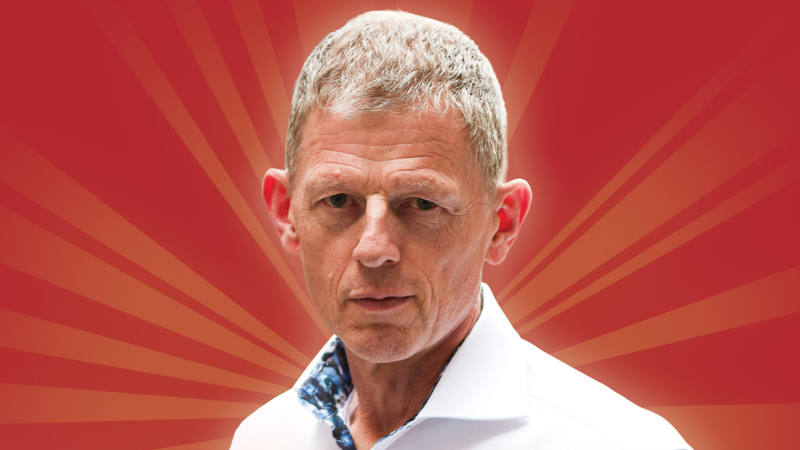
What happens when the life you are living looks successful on paper but no longer feels like your own? In this episode, Erick sits down with former Royal Air Force pilot, leadership coach, and author Will Steel to explore authentic leadership, genuine listening, and the courage to ask a deceptively difficult question: What do you really want?
Will shares how trying to fit the mold nearly ended his RAF officer career, why being himself ultimately earned him a leadership trophy, and why he later walked away from 12 years of flying to start again at the bottom. Their conversation challenges listeners to notice where fear, other people’s expectations, and routine may be keeping them stuck—and to intentionally choose what comes next.
During officer training at the Royal Air Force College Cranwell, Will followed advice to keep his head down, stay out of trouble, and simply get through the course. After 16 weeks, his flight commander told him he was essentially invisible and could not be recommended for graduation.
Faced with repeating the course or leaving, Will decided his strategy of trying to be what he thought others expected had failed. He returned determined to be himself and let the chips fall where they would. Eighteen weeks later, he graduated with the leadership trophy. The experience became a lasting lesson: authentic presence is more powerful than performing someone else’s version of leadership.
Notice when your attention leaves the person in front of you and moves into your own internal commentary. A practical reset is to acknowledge that you missed what was said, ask the person to repeat it, and return your attention to them.
Will recommends sitting with this question rather than forcing a quick answer. Journal about it. Pay attention to what lights you up. Strip away the obvious or socially acceptable answers and look for the work, relationships, and experiences that create a genuine sense of aliveness.
Once you know what you want, examine what is stopping you. Often the obstacle is fear of judgment, failure, loss of status, or uncertainty. Will’s challenge is to recognize how much of that fear may be based on what you imagine other people will think.
Erick describes a familiar place for many professionals: not unhappy enough to leave, but not happy enough to stay. You have built a career, responsibilities, a mortgage, perhaps a pension and children in college—and changing direction feels risky.
Will’s advice is not to impulsively quit. Do the inner work first. Revisit what drew you to your work in the first place, identify what you genuinely want now, and determine whether you need a new career—or simply a renewed connection to the one you already have.
Will Steel is a former RAF pilot turned transformational leadership coach, author, and host of the Free To Lead podcast, known for helping founders, CEOs, and senior leaders lead clearly under pressure. A graduate of RAF College Cranwell and recipient of the Leadership Trophy, Will spent a decade flying before transitioning into leadership development.
He later spent more than 21 years as a senior leader within one of the world’s most influential personal-development organisations, delivering programmes to over 90,000 people across 26 countries.
Today, he works globally across the Middle East, Africa, Europe, and the Americas, exposing the hidden patterns that quietly sabotage performance, decision-making, and relationships. Will is recognised for his direct, grounded approach that helps leaders lead with clarity, integrity, and authenticity—without losing themselves in the process.
Free To Lead challenges the idea that better leadership comes from better tactics. Instead, Will Steel goes straight to the real constraint on performance: the invisible beliefs and automatic reactions formed years earlier that quietly cap confidence, clarity, and decision-making under pressure.
Through practical insights and real-world application, the book shows leaders how to identify and dismantle these internal limits so they can lead from who they truly are.
The result is leadership that is grounded, decisive, and authentic—free from self-doubt, reactivity, and the constant pressure to prove or perform. This is not motivational theory—it’s a practical roadmap to leading with integrity while delivering real results.
A meaningful life is not built by endlessly following the path that looks safest or most acceptable to everyone else. It starts with being present enough to hear yourself, honest enough to ask what you really want, and courageous enough to keep choosing a life that reflects the answer.